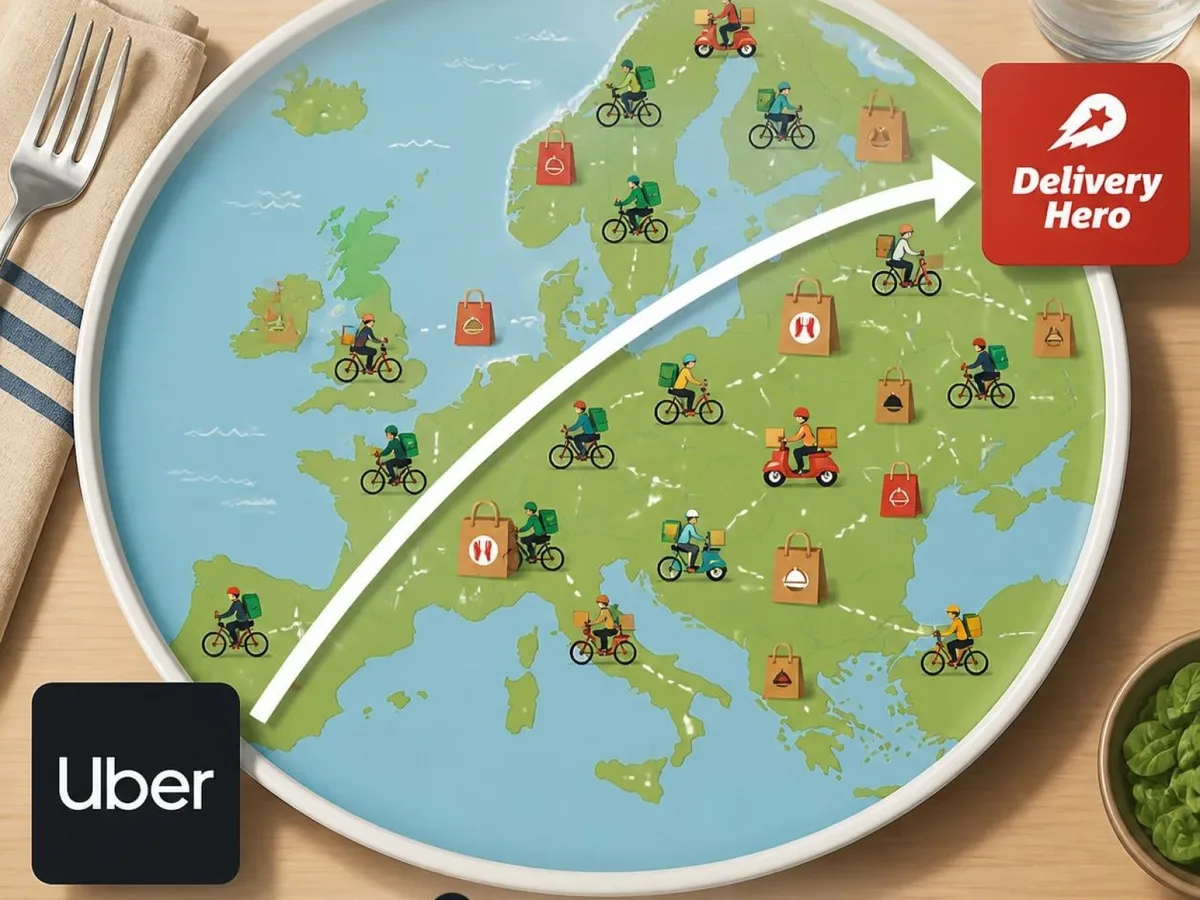
Uber has entered into an agreement to buy the German food delivery giant Delivery Hero for around EUR 13 billion, equivalent to almost DKK 100 billion. It is a striking acquisition that will significantly expand Uber’s position in the food delivery market.
Delivery Hero is one of the world’s largest companies in the industry and operates platforms in numerous markets. The agreement could therefore have consequences far beyond the two companies. Danish restaurants, cafés and other businesses should pay particular attention to how the acquisition affects competition, terms and daily operations.
Potential benefits for Danish businesses
The most obvious benefit is that a larger combined platform could give businesses access to more customers. If Uber combines the technology, marketing and logistics of the two companies, it could create a strong channel for restaurants and retailers that want to reach more people without managing the entire delivery operation themselves.
A larger network could also provide better visibility across markets and potentially more efficient delivery processes. For each business, this could make it easier to handle demand during busy periods and offer delivery as part of the customer experience.
The risk is less competition
However, the acquisition may also cause concern. When a large company becomes even larger, competition between platforms can decrease. In the longer term, this can give the platform a stronger negotiating position in relation to restaurants and retailers.
This could affect visibility, terms and the costs associated with being present on a delivery platform. If businesses find it more difficult to choose between several alternatives, their dependence on a single channel may grow. This is not necessarily a problem from day one, but it is a development that should be followed closely.
What should Danish businesses do now?
We do not expect the acquisition alone to change daily life for Danish businesses immediately. The agreement must first be completed, and authorities may have a role in assessing whether it affects competition. However, businesses should already focus on maintaining an overview of their sales channels and overall finances.
- Follow changes to platform terms and visibility.
- Regularly compare the value of different sales channels.
- Build a customer experience that does not depend on a single platform.
- Use data and insights from daily operations to make better decisions.
For Danish restaurants and retailers, the acquisition could therefore create both new opportunities and greater dependence. The most important task will be to retain flexibility and a clear overview as the market finds its new balance. At Lenius, we are following the development and what it may mean for the restaurant industry.